A tortilla rarely looks like the focus of a prepared meal. Once the wrap filling goes in, the foldable wrap itself can be easy to overlook. Even so, your choice of wrap can shape the nutritional balance of the final meal.
If you are looking at tortilla calories, a minimal energy value does not tell the whole story. It’s whether the tortilla offers the nutrients, feel, and versatility needed for the meals you actually eat.
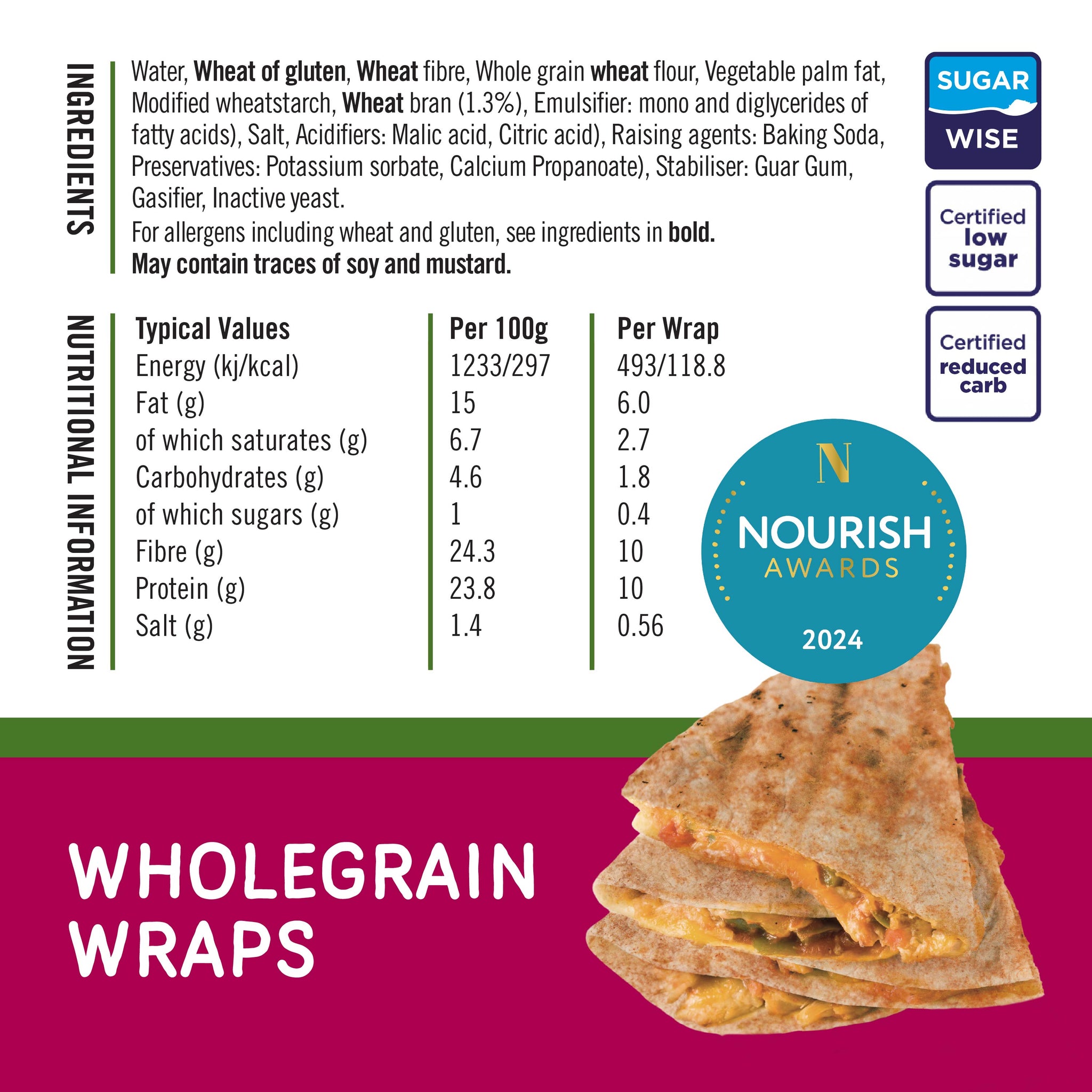
Image credit: fitbakes.co.uk
Why Tortilla Calorie Comparisons Matter
Results for “calories wrap tortilla” can show very different nutrition figures from one product to another. Consider the figures for Mission wraps: its Wholemeal Wrap has approximately 186 calories per wrap, compared with around 125 calories for Carb Balance. Both numbers are drawn from nutrition information published by the manufacturer.
That difference illustrates why checking the particular wrap matters. Tortillas vary in weight, ingredients, and nutritional composition, so appearance alone cannot tell you how many calories you’re eating. It’s also worth remembering that a carb-conscious product isn’t necessarily the lowest-calorie option.
What Happens When You Choose Another Wrap?
Think of a lunch made with grilled chicken, roasted peppers, salad leaves, and a small amount of yoghurt dressing. Now replace the conventional tortilla with a lower-carbohydrate alternative. The ingredients inside stay familiar while the composition of the meal changes.
That is the kind of practical choice Fitbakes Wholegrain Wraps are designed to offer. According to Fitbakes, each wrap contains 2g carbohydrates alongside 10g protein and 10g fibre.
These figures make the item relevant to people who are reducing carbohydrates while still enjoying bread-based meals. Check the complete nutritional panel as opposed to assuming an exact calorie value.
Protein and Fibre Play Different Roles
Although packaging may group them together, protein and fibre are not nutritionally interchangeable. Normal tissue maintenance and repair depend in part on protein. Fibre contributes to healthy digestion and can help a meal feel more satisfying. With Fitbakes reporting 10g of each per wrap, both are useful to look at during a comparison of alternatives.
However, nutritional balance also depends on what else you eat. A tortilla filled with vegetables and a suitable protein source offers something different from one filled mainly with rich sauces.
A Better Way to Prepare Your Tortilla
You can affect the energy content in the completed dish through the preparation technique, without buying another tortilla. A dry pan adds no cooking oil when you toast a tortilla; frying with oil, by contrast, adds calories. The manufacturer recommends around 30 seconds of light toasting for its wholegrain wraps to bring out a richer taste.
Warm the flatbread, then add spinach, grilled mushrooms, and a little cheese for an uncomplicated meal. You could also serve it like a thin flatbread, adding tomato and herbs alongside roasted vegetables. Both approaches offer variety without requiring elaborate preparation.
Why the Full Plate Matters
It’s easy to spend time comparing tortilla labels while overlooking the ingredients placed inside them.
Dressings, cheese, spreads, and cooking fats can all influence the total energy content. If you’re monitoring energy intake, consider the entire meal instead of treating the wrap as the whole calculation.
If you’re following a low-carbohydrate diet, check the carbohydrate content of the sandwich filling as well. Considering both the tortilla itself and its filling provides a fuller view for your food choices.
Choose a tortilla for Your Everyday Meals
A useful calories wrap tortilla should work with your favourite recipes, suit your nutritional priorities, and be enjoyable enough to use regularly. For those seeking a plant-based, lower-carb alternative, Fitbakes Wholegrain Wraps come with company-published protein and fibre values.
Check the serving size, allergen details, ingredient list, and whole nutrition panel before deciding. The flatbread showing the lowest number on the packet is not always the most useful choice. It’s the one that helps you prepare meals that suit your everyday needs.