Six years of experience do not necessarily make it easy for a developer to explain an architectural choice in an interview. Past marketing achievements does not guarantee that a candidate will remember the right performance numbers when questioned.
These examples do not necessarily point to insufficient skills. The interview environment demands several skills at once: retrieving useful details, understanding new questions, organizing ideas, and expressing them clearly despite pressure.
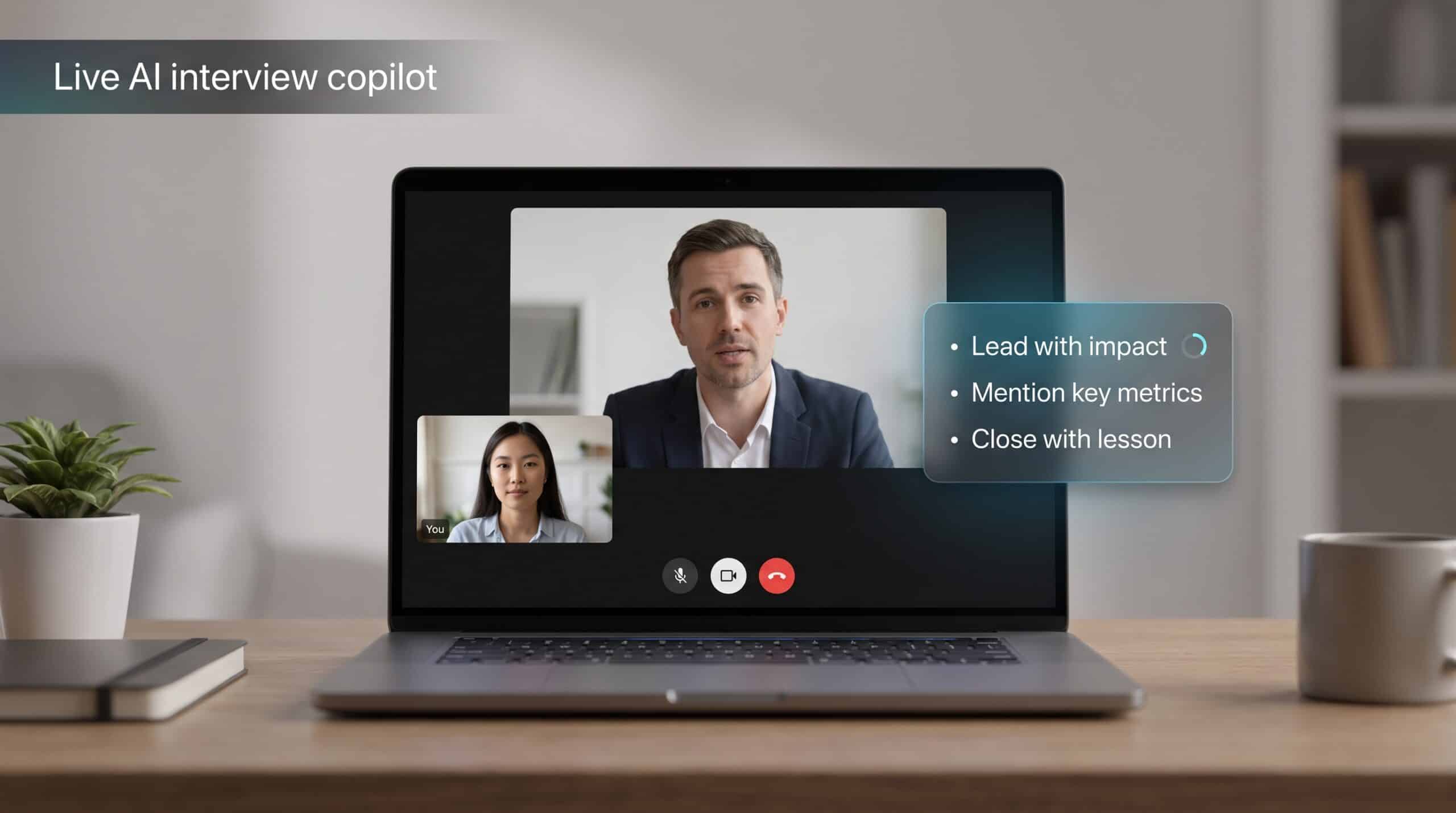
Artificial intelligence is introducing new ways to practice these skills. Interview Pilot combines individualized interview practice, simulated conversations, and live answer suggestions to help candidates approach professional interviews with greater confidence.
Collect Your Professional Stories Before the Interview
Traditional interview preparation often starts by searching for common questions and memorizing suggested responses. The limitation is that generic answers rarely capture the details of someone’s actual career.
Consider the familiar question, “Tell me about a time you managed a difficult project.” A strong answer cannot rely solely on an elegant introduction. It should explain the situation, the candidate’s duties, the decisions they made, and the eventual outcome.
Suggestions from Interview Pilot draw on the candidate’s resume, the role being pursued, and the potential employer.
An AI interview assistant can help users identify experiences worth discussing, organize supporting details, and recognize gaps in their explanations. The next step is to rehearse an accurate account using their natural vocabulary.
Technical Knowledge Needs Clear Communication
An assessment of technical ability goes beyond being familiar with coding languages, software platforms, and engineering principles. Hiring teams often examine how an applicant reasons through a challenge and compares possible solutions.
When discussing database optimization, a developer may be asked to describe why indexing reduced query times, the associated trade-offs, and the method used to measure the improvement.
Candidates using Interview Pilot can receive suggestions for technical prompts as well as behavioral questions. Its interview copilot functionality processes spoken questions and generates contextually relevant responses.
A suggested response is useful only insofar as the candidate also understands the explanation supporting it. Independent explanation of technical decisions becomes particularly important when the interviewer challenges the initial response or changes the scenario.
Practice Conversations, Not Just Isolated Questions
Silent review of interview questions cannot fully replicate the experience of speaking an answer. Verbal rehearsal helps candidates notice communication problems that written practice might miss, such as starting with an overly long introduction, explaining ideas unclearly, or relying on unnecessary technical terminology.
Users can prepare for conversations with recruiters and hiring managers through Interview Pilot’s simulated AI interviews and interview question bank.
A useful preparation method involves answering the same question several times with different degrees of depth. For an initial screening, an applicant might prepare a brief thirty-second explanation, then develop a fuller answer for a technical conversation. This flexibility helps conversations feel more natural and more responsive to the interviewer’s interests.
Using Live AI Support With Care
The availability of real-time interview answers raises questions about integrity during hiring and the rules set by employers. Some organizations permit AI assistance during assessments, while others require candidates to demonstrate their abilities without external support.
Anyone searching for a copilot for interview preparation or live assistance should clarify the employer’s rules before using such technology during an actual interview. Processing interview conversations through software raises additional considerations involving consent and confidentiality. Suggestions from AI should help applicants express authentic knowledge rather than replace the skills they need or make up professional experiences.
Make Interview Practice Part of Your Routine
Interview preparation often happens between job responsibilities, commuting, and personal responsibilities. Accessibility across devices can make consistent practice easier.
Interview Pilot is available on Mac, Windows, iPhone, Android, and through a web version. According to the platform, it serves more than one million users worldwide and offers a free plan with limited weekly AI usage alongside paid subscriptions for unlimited use.
The purpose of effective preparation is not simply to learn perfect wording. It’s about becoming comfortable discussing what you know, demonstrating how you think, and explaining the value you can bring to an organization.
Used thoughtfully, Interview Pilot can support that process while keeping the candidate’s own experience, judgment, and communication skills at the center of the conversation.