A tortilla can look rather unremarkable on the plate. Thin and easy to fold, it often sits unnoticed beneath whatever you put inside. The wrap may be understated, but selecting one with a different nutritional profile can affect the overall meal.
If you are looking at tortilla calories, a minimal energy value does not tell the whole story. It’s whether the tortilla offers the nutritional qualities, texture, and flexibility needed for the meals you actually eat.
The Calorie Comparison Behind the Numbers
A quick search for “calories wrap tortilla” often brings up products with widely different nutritional values. Mission reports approximately 186 calories for a Wholemeal Wrap and around 125 for a Carb Balance wrap, showing the difference. These figures come from the manufacturer’s published nutrition data.
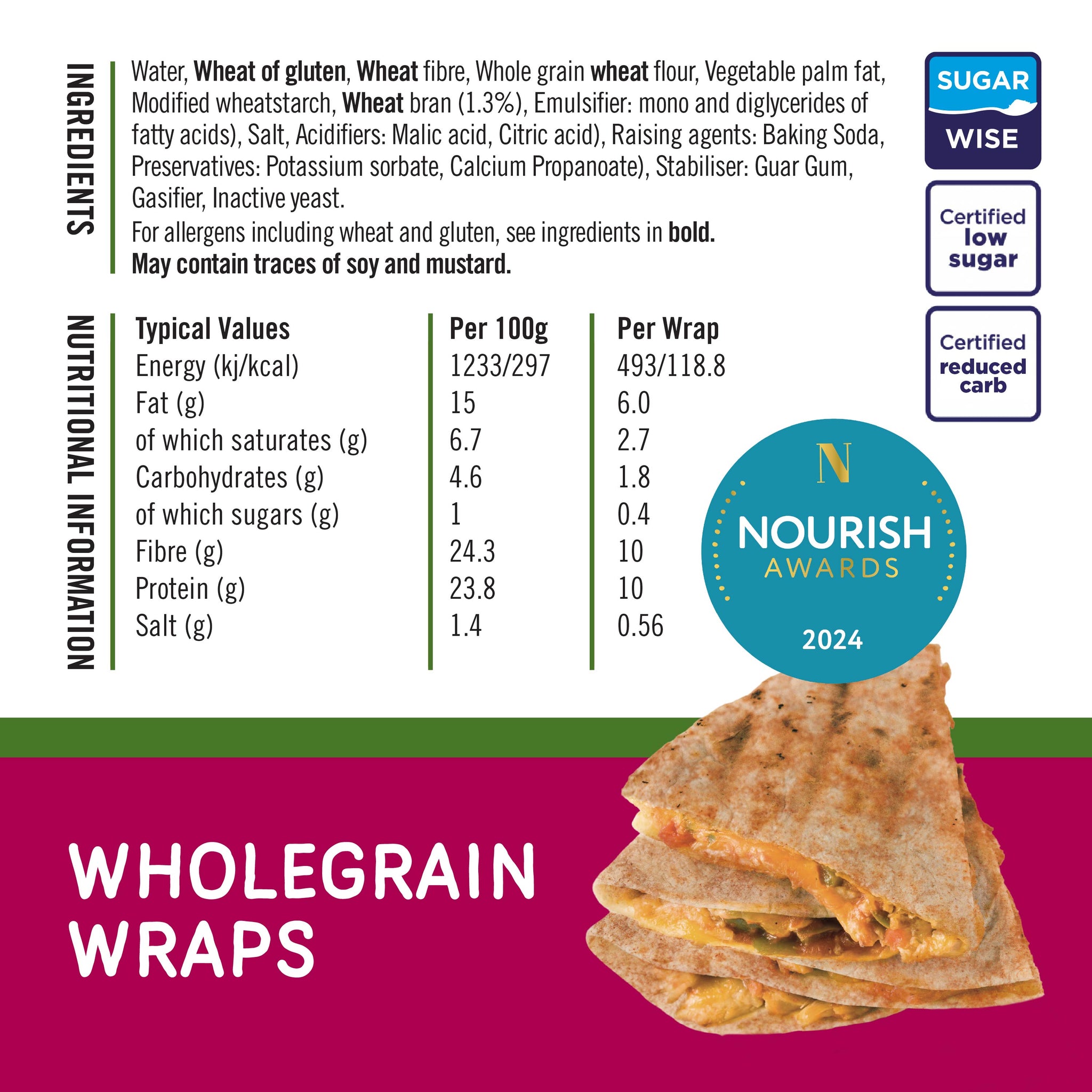
Image credit: fitbakes.co.uk
The gap between those figures shows why it is useful to compare specific products. Tortillas vary in size, ingredients, and nutrient content, so appearance alone cannot tell you how many calories you’re eating. Lower carbohydrate content and lower calorie content do not always go together.
What Happens When You Change the Wrap?
Imagine preparing your regular midday meal with roasted peppers, grilled chicken, salad leaves, and a spoonful of yoghurt dressing. Keep the filling but choose a lower-carb wrap in place of the conventional one. You still have essentially the same lunch, although its nutrient composition is different.
Fitbakes Wholegrain Wraps are intended to let people keep using familiar fillings. Fitbakes lists 2g of carbohydrates, 10g protein, and 10g fibre for each wholegrain wrap.
Someone reducing their carbohydrate intake may find those manufacturer-reported numbers relevant when choosing bread-based meals. The exact calorie content should be verified on the wrap or loaf’s full nutritional label.
Understanding The Roles of Protein and Fibre
Food labels often highlight protein and fibre side by side, although they contribute differently of nutrition. Normal tissue maintenance and repair are supported by protein. Fibre supports digestive health and may help a meal feel more satisfying. Fitbakes lists 10g of protein and 10g of fibre per wrap, making each of these figures relevant to shoppers.
Of course, the wrap is only one element of your lunch. Vegetables and a suitable protein source produce a distinct meal from a filled wrap dominated by rich sauces.
Tortilla Preparation: Small Choices Matter
You may alter the total calories in the prepared dish through your cooking method, without buying another tortilla. Dry-toasting a tortilla adds no cooking oil, whereas frying it in oil introduces more energy. Fitbakes recommends lightly toasting its wholegrain wraps for approximately 30 seconds to develop a more pronounced malty taste.
For a quick meal, try warming the flatbread before adding grilled mushrooms, spinach, and a little cheese. You could also serve it like a thin flatbread, adding tomato and herbs alongside roasted vegetables. Both approaches offer variety without requiring elaborate preparation.
Don’t Forget the Whole Meal
Checking wrap labels is useful, but it can be just as easy to ignore the filling.
Ingredients such as cheese, sauces, spreads, and cooking oils add to the energy total. If you’re monitoring energy intake, consider the entire meal rather than treating the wrap as an isolated ingredient.
The wrap filling’s carbohydrate contribution matters too if you are following a lower-carbohydrate plan. This approach gives you a better sense of what you’re eating.
The Right Wrap Is More Than a Number
When comparing a calories wrap tortilla, consider whether it suits the dishes you make, supports your nutrition goals, and tastes good. Fitbakes Wholegrain Wraps offer a plant-based, carb-conscious option with protein and fibre figures reported by the manufacturer.
An informed choice starts with reviewing ingredients and allergens, serving size, and the entire nutrition panel. The most practical choice isn’t necessarily the flatbread with the lowest figure on its packaging. It’s the one that helps you prepare meals that suit your daily routine.